Your vehicle’s braking system is its single most vital safety component. Whether you are navigating daily commuter traffic along Deerfoot Trail, handling stop-and-go driving downtown, or descending steep icy inclines in winter, prompt stopping power is non-negotiable.
Brake components naturally wear down over time due to friction and heat. However, driving with compromised brakes turns routine stopping into a severe safety hazard and risks costly secondary damage to your rotors and calipers. Knowing how to recognize the early warning signs of brake wear allows you to address issues before they cause total braking failure.
This guide details the 9 essential warning signs that indicate you need Brake Repair Calgary service, explains how to distinguish normal wear from dangerous failure, and outlines how mobile diagnosis and repair keeps your vehicle stopping safely across Calgary.
How Your Vehicle’s Braking System Works
Most modern passenger cars and light trucks use a hydraulic disc brake system. When you press the brake pedal, hydraulic brake fluid transfers pressure through flexible lines down to the brake calipers. The calipers then squeeze high-friction brake pads directly against rotating metal discs called rotors.
This friction generates immense heat, rapidly converting your vehicle’s forward momentum into thermal energy to bring you to a smooth, controlled stop. Over thousands of kilometers, the continuous friction gradually wears away the pad material and thins the rotors. Timely Brake Repair Calgary maintenance ensures these components remain within safe operating thickness thresholds.
9 Essential Warning Signs You Need Brake Repair
Brake systems rarely fail without warning. Paying attention to sensory clues—sounds, physical feedback through the pedal, and visual cues—will tell you precisely when it is time to schedule a Brake Repair Calgary inspection.
1. High-Pitched Squeaking or Squealing Noises
Modern brake pads feature built-in metallic wear indicators. When the friction material wears down to approximately 2 to 3 millimeters, this metal tab rubs directly against the rotor casing, producing a high-pitched squeal when braking. If you hear persistent squeaking, it is a clear sign to arrange a Brake Repair Calgary visit for a pad replacement before rotor damage occurs.
2. Harsh Metallic Grinding Noises
A harsh, metallic grinding or growling sound means your brake pads have worn down completely to their steel backing plates. Metal is now grinding directly against metal, carving deep grooves into your brake rotors. Driving under these conditions drastically increases stopping distances and requires immediate Brake Repair Calgary intervention to replace both pads and ruined rotors.
3. Spongy, Soft, or Mushy Brake Pedal
When you press the brake pedal, it should feel firm and responsive. If the pedal feels soft, spongy, or sinks almost to the floorboard before engaging, air or moisture has likely entered the hydraulic lines, or there is a internal fluid leak. Booking a Brake Repair Calgary mechanic to inspect the lines and perform a brake fluid flush restores hydraulic system pressure.
4. Steering Wheel Vibration or Pedal Pulsation
If your steering wheel shudders or the brake pedal pulses rhythmically under your foot when slowing down, your brake rotors have likely suffered thermal warping or uneven pad material deposition. Warped rotors prevent brake pads from making continuous, even contact, requiring an expert Brake Repair Calgary technician to measure rotor runout and perform resurfacing or replacement.
5. Vehicle Pulling to One Side While Braking
If your car swerves or pulls sharply toward the left or right when you apply the brakes, you likely have an uneven braking force. This symptom usually points to a seized caliper piston, unevenly worn brake pads, or a collapsed hydraulic brake hose. An on-site Brake Repair Calgary diagnostic check pinpoints the exact mechanical fault causing the alignment pull.
6. Burning Smell Near the Wheels
A sharp, chemical, or burning rubber smell coming from your wheel wells after driving indicates severe brake overheating. This often occurs when a stuck brake caliper fails to release, causing the pads to rub continuously against the rotor while driving at speed. If you smell burning brakes, pull over safely and request urgent Brake Repair Calgary support to avoid brake fade or wheel bearing failure.
7. Dashboard Brake Warning Light
Your vehicle’s instrument cluster features dedicated warning lights for the braking system. If the ABS (Anti-lock Braking System) light or red Brake warning icon remains lit while driving, your onboard computer has detected low hydraulic fluid levels, sensor malfunctions, or pressure drops. Scheduling a Brake Repair Calgary diagnostic scan quickly identifies the stored trouble code.
8. Reduced Responsiveness or Dragging Feeling
If your vehicle feels sluggish during acceleration or continues to slow down excessively fast when taking your foot off the gas pedal, a brake caliper may be frozen in the engaged position. Dragging brakes waste fuel, overheat components, and accelerate friction wear, making a Brake Repair Calgary evaluation essential.
9. Visible Thinning of the Brake Pad Material
You can often inspect pad thickness visually through the spokes of your alloy wheels. If the friction pad material appears thinner than 3 millimeters (about the thickness of two stacked pennies), your friction linings are depleted. Scheduling a preventive Brake Repair Calgary pad service at this stage prevents surface scoring on expensive rotors.
Normal Brake Wear vs. Urgent Brake Problems
Not every sound or symptom indicates immediate catastrophic failure. Understanding the difference between acceptable operational noise and urgent mechanical danger helps you make informed choices:
| Symptom / Condition | Normal / Non-Urgent Condition | Urgent Safety Issue |
| Morning Squeak / Rust Film | Light squeaking on initial application after rain, snow, or high humidity (harmless flash rust clearing off rotors) | Loud, continuous squealing or grinding every time you apply the brakes |
| Brake Dust on Wheels | Dark dust accumulation on front alloy wheels over weeks of driving | Sudden heavy black metal shavings or burning odor near a single wheel |
| Pedal Pressure | Firm resistance after roughly 1 to 2 inches of smooth pedal movement | Pedal sinks completely to the floorboard or requires double-pumping to stop |
| Stopping Alignment | Vehicle maintains a straight path when hands are placed lightly on the wheel while stopping | Car pulls aggressively toward the shoulder or into oncoming traffic under braking pressure |
| Anti-Lock Pulse | Pulsing pedal accompanied by a chatter sound during hard panic stops on ice or gravel (normal ABS engagement) | Persistent pedal shuddering during gentle, dry-pavement slowing |
If your vehicle exhibits symptoms listed under the urgent safety column, arranging a fast Brake Repair Calgary mobile callout ensures your vehicle is repaired safely where it is parked.
Why Calgary Driving Conditions Accelerate Brake Wear
Calgary’s unique geographic and climatic conditions place extraordinary mechanical stress on automotive braking components.
- Freezing Temperatures & De-Icing Salts: Winter road salt, slush, and gravel accelerate rust formation on raw cast-iron brake rotors and caliper slide pins. Corroded slide pins frequently seize, causing brake pads to wear unevenly or stick against the rotor.
- Steep Incline Stop-and-Go: Navigating city terrain like Crowchild Trail, Sarcee Trail, or hilly suburban neighborhoods forces frequent, heavy braking that generates extreme friction temperatures.
- Gravel & Road Grit: Spring thaw leaves fine road gravel and sand trapped between pad linings and rotor faces, causing premature surface scoring and squealing noises.
According to winter driving and safety guidelines from Transport Canada, keeping your braking system in top operating condition is essential for stopping safely on icy or slush-covered roads. Arranging seasonal Brake Repair Calgary inspections keeps rust and grit from compromising stopping distance.
Mobile Brake Diagnosis and Repair in Calgary
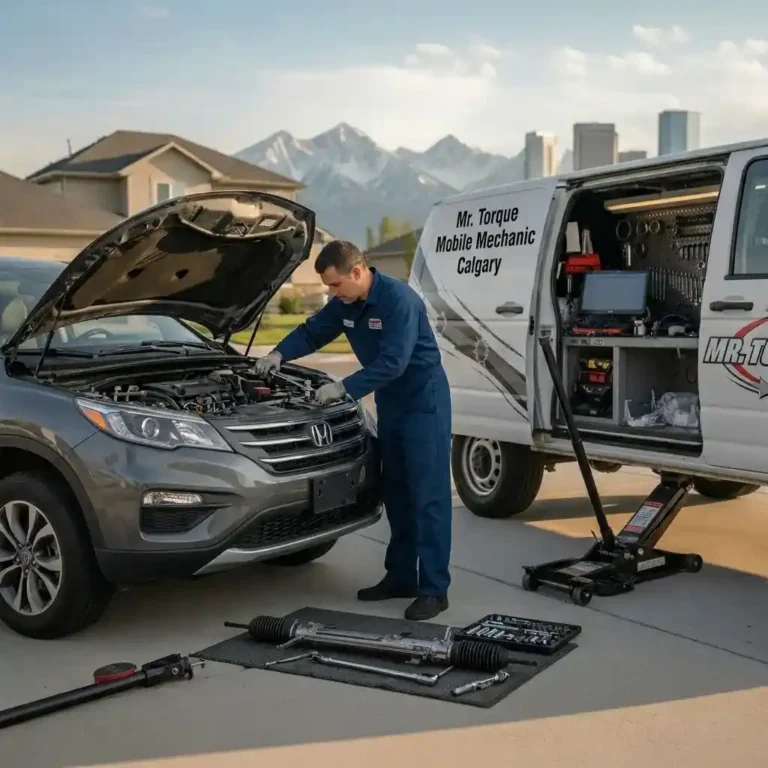
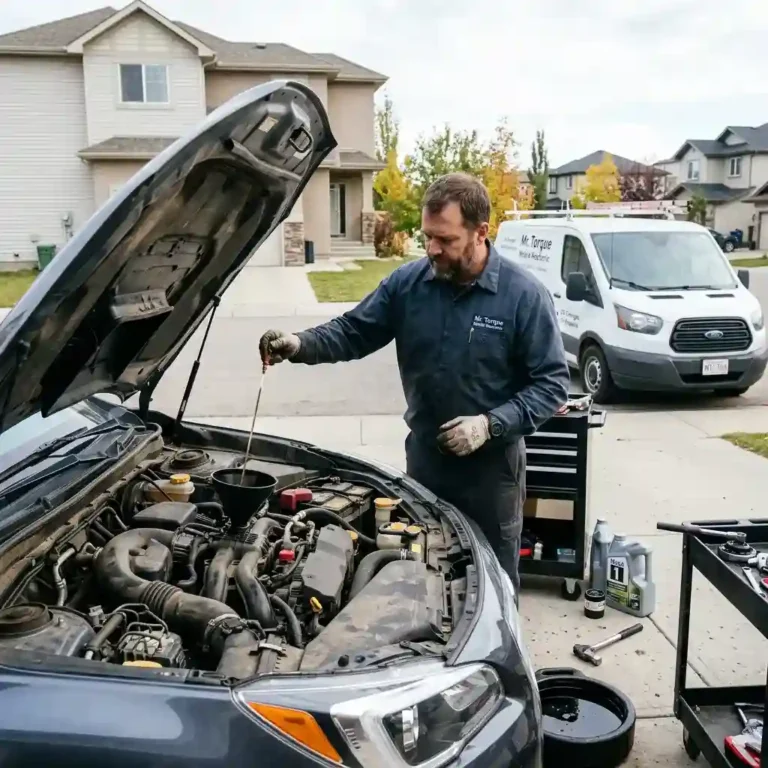
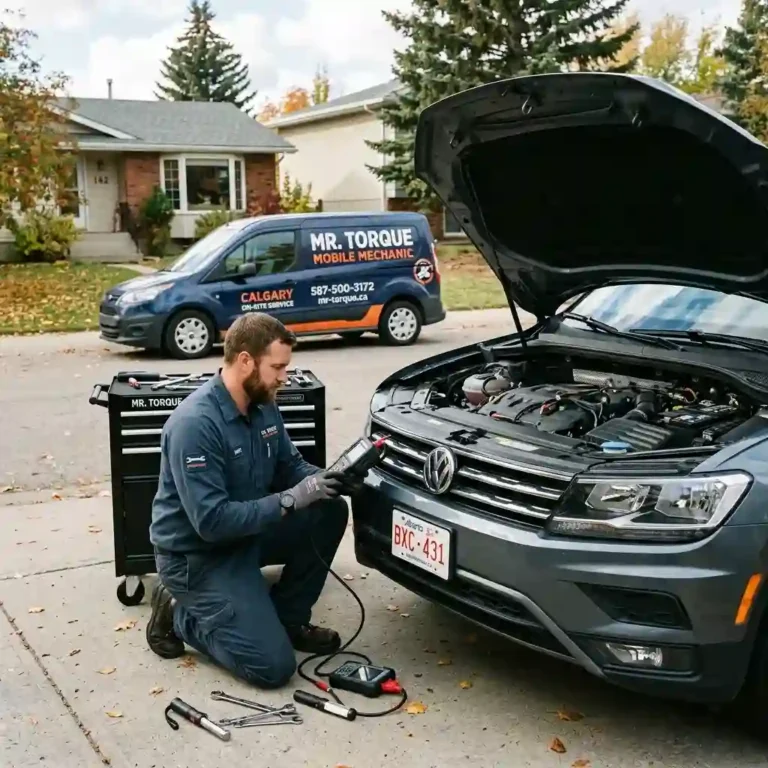
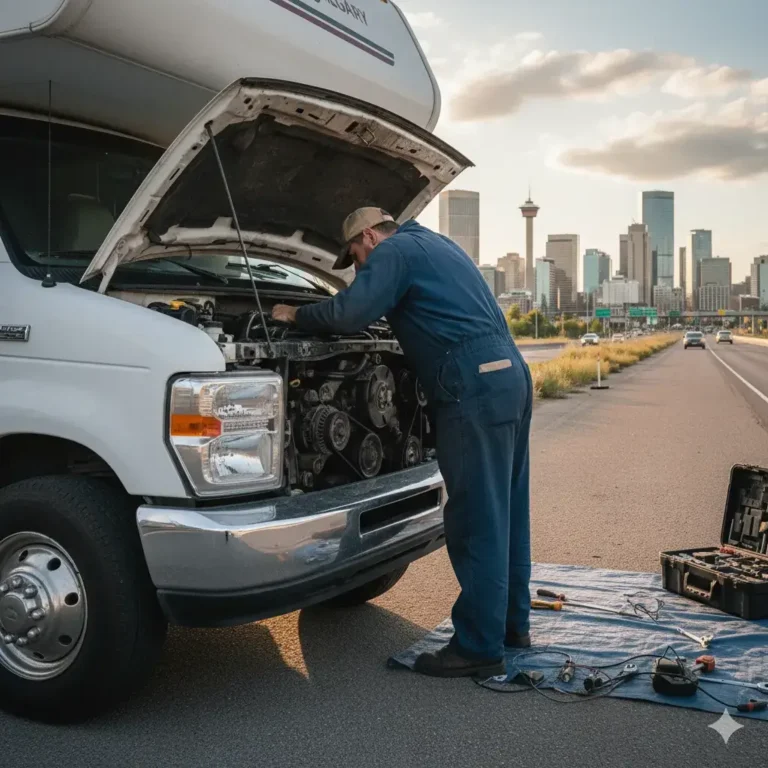
Addressing brake issues no longer requires driving a dangerous car to a shop or waiting hours in a commercial customer lounge. Mobile mechanics perform complete Brake Repair Calgary services on-site at your home, workplace, or roadside location.
Here is how on-site mobile Brake Repair Calgary service works:
- On-Site Physical & Measurement Inspection: A certified mechanic removes your wheels on-site to measure brake pad thickness with precision calipers, inspect rotor surfaces for thermal scoring, and check hydraulic lines for leaks.
- Caliper & Hardware Service: The technician inspects caliper pistons, lubricates slide pins with high-temperature silicone grease, and replaces worn anti-rattle hardware clips.
- Component Replacement: Worn pads are swapped out for high-grade ceramic or semi-metallic friction sets, and thin or warped rotors are replaced with fresh units matching factory specifications.
- Hydraulic System Bleeding: If soft pedal symptoms were present, the mechanic flushes old, moisture-laden brake fluid and bleeds air bubbles out of the lines.
- On-Site Safety Verification: The technician performs a controlled low-speed road test to verify proper pad bed-in, pedal firmness, and quiet stopping performance.
If diagnostic testing reveals broader mechanical concerns alongside worn brakes, technicians can perform additional mobile auto repair services right on the spot.
Simple Habits to Extend the Life of Your Brakes
- Avoid Hard, Sudden Braking: Anticipate traffic stops early and coast down speed gradually to reduce frictional heat build-up.
- Lighten Your Cargo Load: Carrying unnecessary heavy gear in your trunk increases momentum, forcing brakes to work much harder to slow the vehicle.
- Flush Brake Fluid Periodically: Brake fluid absorbs ambient moisture over time, lowering its boiling point and causing internal hydraulic corrosion.
- Clean Wheels & Undercarriage in Winter: Rinsing road salt off your wheels prevents caliper slide pins and hardware from rusting shut.
When friction pads eventually wear down despite good driving habits, scheduling a Brake Repair Calgary callout ensures seamless maintenance.
Book Your On-Site Brake Repair with Mr. Torque
Don’t compromise on stopping safety. Mr. Torque Mobile Mechanic delivers fast, transparent, and expert automotive care directly to your location anywhere in Calgary.
Our equipped mobile service vans carry diagnostic gear and premium-quality braking parts to handle pad replacements, rotor installations, and caliper repairs right in your driveway.Whether you need an urgent Brake Repair Calgary visit, computer-based diagnostics, specialized mobile vehicle inspection, or urgent emergency roadside assistance, our mechanics complete the work safely on-site.
Learn more about our company standards on our About Us page or read more practical maintenance advice on our automotive blog.
Ready for quiet, reliable stopping power? Contact us directly on our Contact Us page or easily Book an Appointment online today for your Brake Repair Calgary service!
Frequently Asked Questions
How much does a typical Brake Repair Calgary service cost?
Standard brake pad replacement typically costs between $180 and $300 per axle. Full brake service including new rotors and ceramic pads ranges from $350 to $650 per axle depending on vehicle make and rotor sizing. On-site mobile service saves you additional towing charges.
How long do brake pads usually last in Calgary?
In typical Calgary driving conditions, brake pads last between 40,000 and 70,000 kilometers. Frequent stop-and-go commuting, towing, or aggressive winter driving accelerates pad wear, making regular Brake Repair Calgary inspections important.
Is it necessary to replace rotors every time I change brake pads?
Not always. If rotors remain above minimum manufacturer discard thickness and show no surface grooving, heat cracking, or warping, they can be reused. However, fitting new ceramic pads onto smooth, fresh rotors ensures maximum pad longevity and silent operation.
How long does a mobile Brake Repair Calgary appointment take?
Replacing pads and rotors on a single axle usually takes between 45 minutes to 1.5 hours on-site. Complete four-wheel brake servicing takes roughly 2 hours from start to finish.
Why do my new brakes squeak slightly after installation?
New brake pads require a short “bedding-in” period (typically 100 to 200 kilometers) to deposit an even layer of friction material onto the rotor surface. Minor squeaking during light initial braking is normal during this break-in phase.
Conclusion
Your braking system gives clear warning signals before complete mechanical failure occurs. Recognizing indicators like high-pitched squealing, grinding noises, soft pedal feedback, steering wheel shudder, or dashboard warning lights allows you to schedule a Brake Repair Calgary appointment before minor wear leads to costly rotor damage or safety hazards.
Choosing on-site mobile brake diagnosis and repair eliminates towing fees, removes shop scheduling hassles, and restores safe stopping power right at your home or workplace.
If your vehicle is exhibiting squeaking, grinding, or soft pedal behavior today, contact Mr. Torque Mobile Mechanic for fast, professional Brake Repair Calgary service delivered straight to your door!